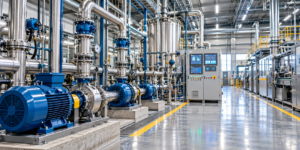
Clean, safe water often needs more than basic filtration. This is where activated carbon for water treatment adds a further purification stage, targeting contaminants that conventional filtration cannot fully remove. Through adsorption, activated carbon reduces dissolved organic contaminants, unpleasant tastes and certain chemical compounds. How effective it is depends mainly on the type of carbon, the water quality, the contact time and the contaminants being targeted.
At Keiken Engineering, choosing the right filtration media starts with understanding the real treatment needs, rather than applying one solution to every case. Activated carbon can be particularly useful both for improving drinking water quality and for treating wastewater.
Contents
Which contaminants does activated carbon remove?
How often should carbon block filters be replaced?
Do carbon filters reduce water flow and pressure?
Which contaminants does activated carbon remove?
Activated carbon reduces a wide range of organic compounds thanks to its high adsorption capacity and porous internal structure. Its exact performance varies with the specific characteristics of the carbon and the water.
In water treatment, activated carbon is effective against compounds such as pesticides, hydrocarbons, phenol, soluble dyes, chlorine, solvents and other organic substances. Coconut shell carbon stands out for its higher porosity and hardness.
Activated carbon is particularly useful when the aim is to polish water after conventional treatment or to protect downstream biological treatment from potentially toxic compounds.
Also read: How long does activated carbon last in water filters?
How often should carbon block filters be replaced?
Replacement depends on the water quality, the contaminant load, the operating conditions and pressure variations — there is no single universal schedule.
A straightforward approach:
- Identify the treatment objective and the contaminants entering the system.
- Monitor outlet water quality, watching for changes in taste and treatment performance.
- Check pressure and flow conditions for signs of clogging.
- Assess carbon exhaustion using the system’s operating data.
- Replace or regenerate the media when treatment performance is no longer adequate.
This approach is far more reliable than replacing the carbon simply because a fixed period has passed. In larger systems, a professional assessment can help define the right operating and replacement strategy.
Do carbon filters reduce water flow and pressure?
A carbon filter can reduce water flow and pressure, particularly when it is clogged or incorrectly sized, but using activated carbon does not in itself mean poor flow.
In drinking water filtration with activated carbon, flow depends on the filter design, the carbon particle size, the hydraulic load and the accumulated contaminants. A correctly designed system balances adequate contact time with the required flow rate.
In industrial applications, we optimise filtration with activated carbon so that hydraulic performance and treatment efficiency work together.
Find the right activated carbon solution with Keiken Engineering
Effective activated carbon treatment depends on more than choosing a carbon media. Adsorption capacity, pore structure, water quality and treatment objectives together determine how well contaminants are reduced. Whether the goal is drinking water purification, wastewater treatment or tertiary treatment, selecting the right media is essential for reliable performance.
At Keiken Engineering, we combine water treatment experience with quality filtration media to help you identify the solution best suited to your application. Looking for the right activated carbon for your water treatment system? Contact Keiken Engineering to discuss your water requirements and explore the most suitable filtration solution.
Frequently asked questions
What is the difference between granular and powdered activated carbon?
Granular carbon is used in fixed-bed filters, whereas powdered carbon is dosed directly into the water. Each has different uses depending on the process requirements.
Can activated carbon be used in desalination?
Yes, it can be used at an early stage of treatment, depending on the level of contamination and the process design. It does not, however, replace the main separation processes of desalination.
What determines the size of a carbon bed?
Carbon bed size depends on the flow rate, contamination level, empty bed contact time, type of carbon and the treatment efficiency required, so it has to be sized for each specific application.