
- Home
- Filtration
- Filtration Media
- Activated carbon for water treatment
Activated carbon for water treatment
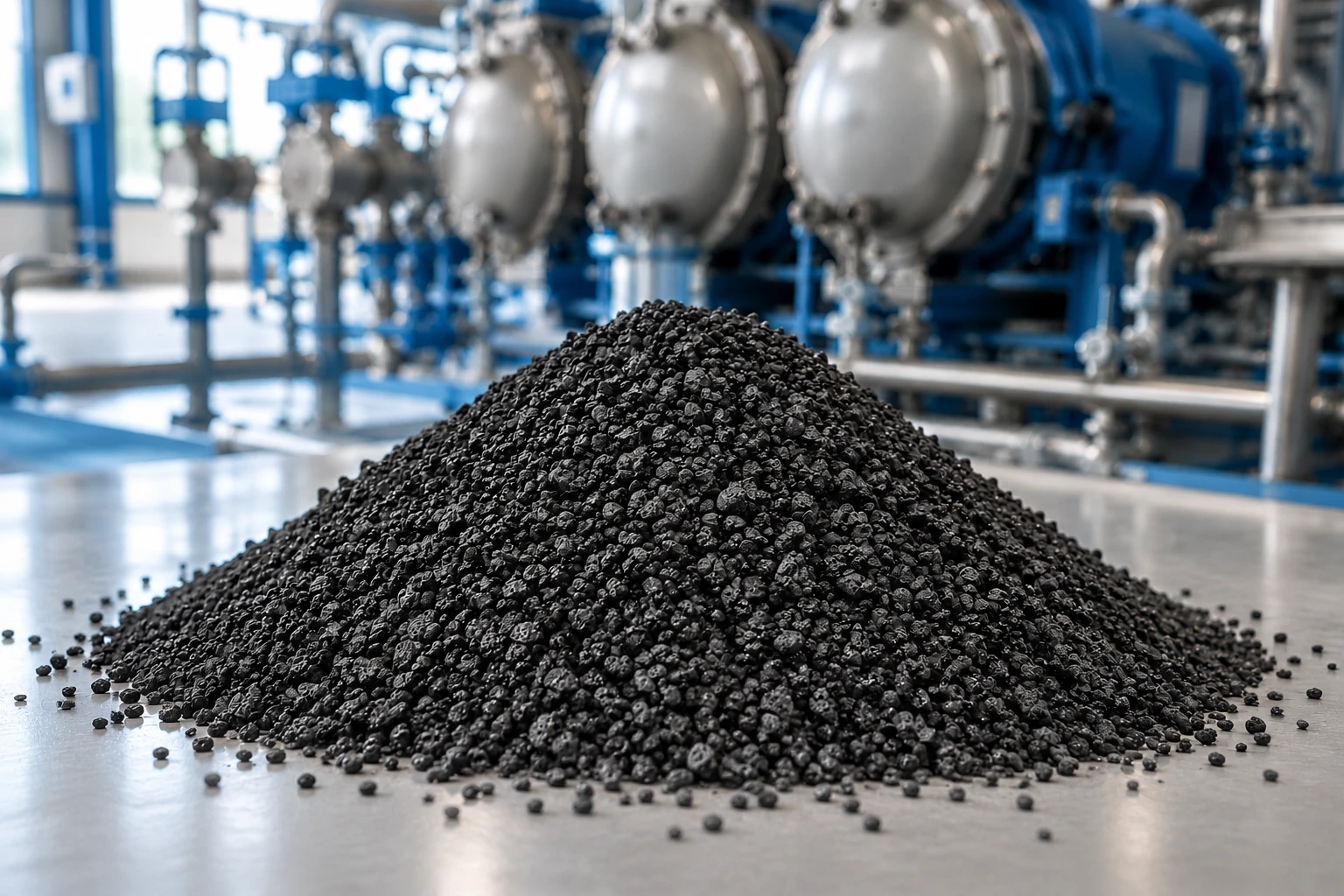
Granular activated carbon (GAC), also known as activated charcoal, removes organic matter and chlorine by adsorption, together with compounds responsible for taste and odour. KEIKEN activated carbon is steam-activated at high temperature. It complies with EN 12915:2009 and holds NSF certification.
What is activated carbon used for in water treatment?
Activated carbon removes by adsorption what a solids filter cannot retain: dissolved organic matter, chlorine and compounds responsible for taste and odour. It is used in drinking water treatment, as a polishing stage after other processes and to protect membranes from free chlorine, which can damage them.
Answers to your questions about activated carbon
What is activated carbon used for in water treatment?
It removes organic matter and chlorine by adsorption, together with compounds that affect taste and odour. It also protects reverse osmosis membranes from free chlorine.
What is the iodine number and why does it matter?
The iodine number indicates the carbon’s available adsorption capacity. Together with the carbon content, it helps determine the medium’s actual performance.
Mineral or coconut-shell activated carbon?
Coconut-shell carbon has greater microporosity and generally performs better with small molecules, while mineral carbon has a broader pore distribution. We supply both types.
Which standard does KEIKEN activated carbon comply with?
EN 12915:2009 for the treatment of water intended for human consumption, with internationally recognised NSF certification.
Can it also be used for gases?
Yes. It is an effective medium for removing unwanted substances from both liquids and gases.
Which packaging formats are available?
It is supplied in 1 m³ big bags and 25 kg bags.
What is an activated carbon filter?
A filter containing a bed of granular activated carbon that removes organic matter, chlorine and taste- and odour-causing compounds by adsorption. In reverse osmosis systems, it protects membranes from free chlorine.
Technical articles
Let’s discuss your filter bed
We are a B Corp company
B Corp certification independently assesses a company’s environmental and social performance, transparency and legal accountability. For us, it is more than a label: it provides a framework for our technical decisions. Every plant we design is also assessed for its energy consumption, the water footprint it helps reduce and its impact where it is installed.