
- Home
- Compact Plants
- Water reuse

Water REUSE plants.
Reclaiming water for a second use.
We design and manufacture compact water reuse plants tailored to each installation’s needs and capable of treating greywater, industrial water or process water.
Our solutions allow you to recover water and give it a second life for uses such as irrigation, washdown, cleaning or toilet cistern refilling, reducing drinking water consumption by up to 70% and our clients’ water footprint.
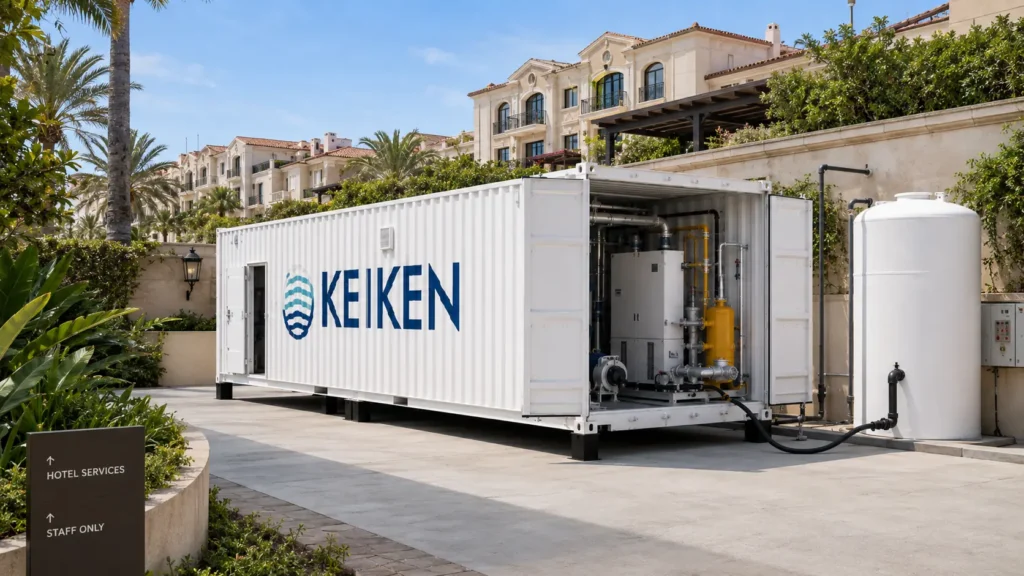
Skid-mounted or containerised
High recovery rate depending on source water quality.
Adaptable to your needs.
Optimised consumption.
Water reclaimed to suit its final use.
Water reuse plants for greywater, industrial water and process water.
We design and implement advanced wastewater treatment systems. Our solutions enable efficient reuse of greywater, industrial process water, water from industrial laundries and other sources for washdown, irrigation of grounds and gardens, toilet cistern refilling and other uses.
This technology not only reduces drinking water consumption by up to 70%, but also significantly reduces the water footprint of industrial sites, ports, hotels, campsites and residential developments.
By law, reused water is NOT permitted for human consumption.
From wastewater to reuse.
Design and engineering
We design and define the process according to feed water quality, the required flow rate and the final objective.
In-house manufacturing
We assemble and integrate equipment, piping, instrumentation and control at our facilities.
Modular design
We integrate process, quality, safety and regulatory requirements from the design stage.
FAT testing
We test and validate the plant in our testing area before dispatch to reduce adjustments at its destination.
Commissioning
We install, start up and verify the plant’s operation at its destination.
What are the benefits of a water reuse plant?
Lower drinking water consumption. Water reuse can reduce drinking water consumption by up to 70%.
A second life for water. For irrigation, washdown, machinery cleaning, gardening or toilet cistern refilling, among other applications.
A smaller water footprint. Reducing demand for fresh water improves the sustainability of your facilities.
High recovery and efficient use. Systems designed to maximise water recovery according to the characteristics of the incoming wastewater.
An automated, adaptable solution. Fully automated skids, with or without a container, and production capacities configurable to suit each installation’s needs.
Safe water reuse in accordance with regulations. Treatment is adapted to the quality required for each use and applicable regulations, ensuring safe water reuse.
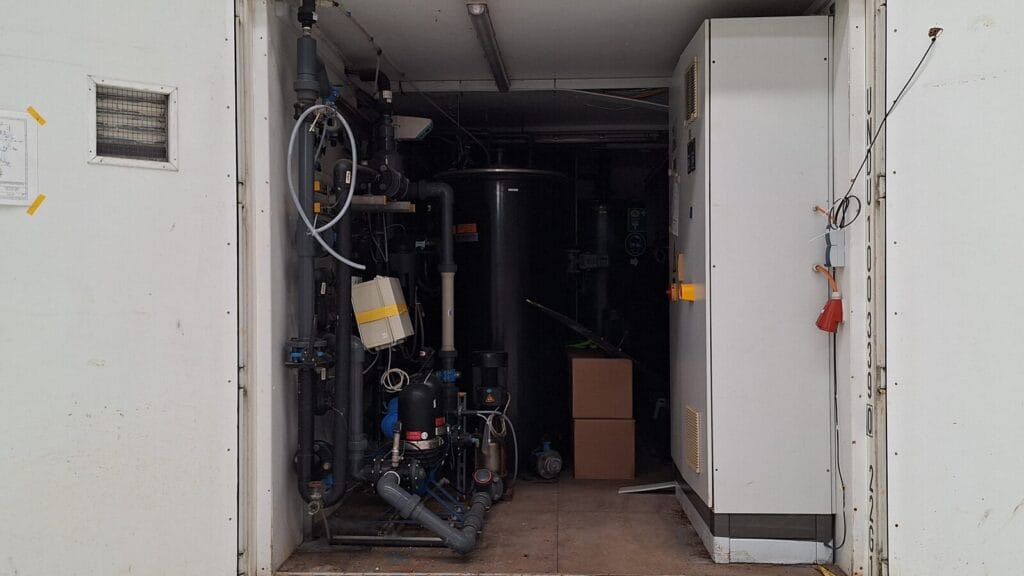
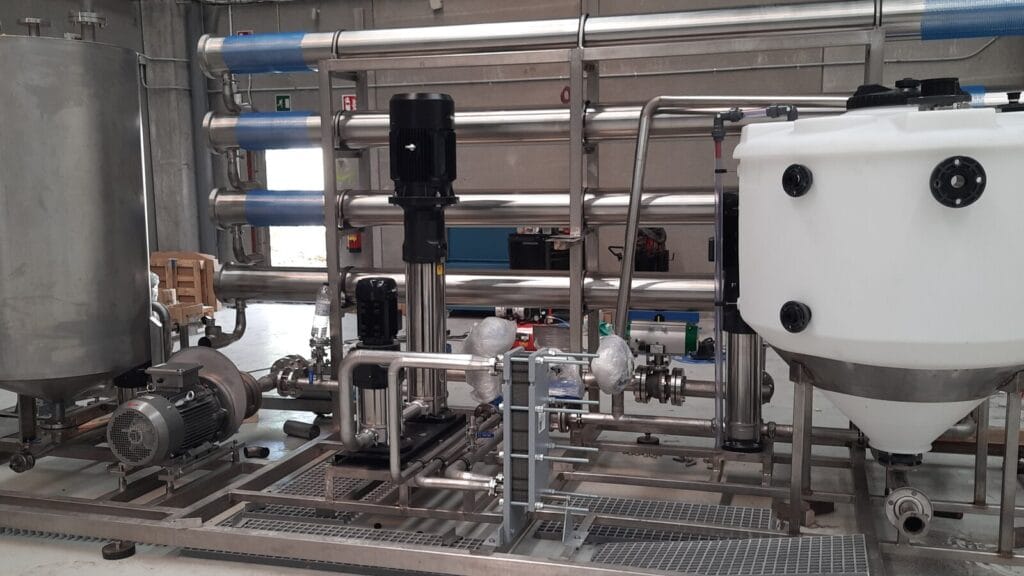
Experience demonstrated on site.
A selection of projects where we have provided engineering, equipment or installation in different settings.
Your questions about water reuse, answered.
What water can be reclaimed and reused?
Previously treated municipal or industrial effluent, as well as greywater where the application is viable. We assess composition, variability and flow rate to define the additional treatment needed and the uses that can benefit from the resulting water.
What uses is reclaimed water designed for?
Applications such as irrigation, cleaning or compatible industrial utility uses. Feasibility depends on the specific use, achievable quality and applicable requirements. These plants are intended for non-potable uses.
How is the target quality defined?
According to the intended use and the corresponding requirements. For projects subject to Royal Decree 1085/2024, the quality and controls associated with that use are defined before sizing the treatment.
What technologies can a water reclamation plant include?
Filtration, ultrafiltration, reverse osmosis, activated carbon adsorption and disinfection, according to the contaminants to be reduced. Not all treatment trains need the same stages; these are selected based on the effluent analysis and the water’s intended use.
Can it be integrated into an existing wastewater treatment plant?
Yes. We review its effluent quality, flow variations, space, hydraulic connections and control system. Integration must also account for reclaimed water storage and the management of reject and backwash streams.
What recovery percentage can be achieved?
The percentage is calculated for each treatment train. The indicative range of 75–85% may be achievable in certain configurations, but is not a general guarantee. It depends on the effluent, treatment, internal water consumption and target quality.
How is the safety of the water reuse system controlled?
Through the barriers and controls defined for the intended use. The project must account for risk management, analytical monitoring and applicable storage and distribution conditions.
Can the plant be modular or installed in a container?
Yes. The format is adapted to the process and available space. Modularity can facilitate assembly and future expansion, provided that the wastewater treatment plant’s capacity and reclaimed water demand are compatible.
How are consumption and water savings assessed?
We compare the demand that can be met, net recovery and energy, chemical and maintenance requirements. Actual savings depend on how much reclaimed water the installation can use continuously.
Do you include commissioning and remote monitoring?
We can include installation, testing, operational adjustment, training and remote monitoring. The scope is defined according to the existing equipment and the organisation responsible for operating the plant.
In which sectors can water reuse make sense?
At installations with usable effluent and compatible demand: hotels, golf courses, green spaces and industries such as food processing, textiles or chemicals. Feasibility is assessed for each stream and use, rather than automatically applying the same solution across sectors.
What information do you need to assess my project?
Analysis of the treated effluent, flow rate and variations, final use, water demand, target quality, location and available utilities. Send us the installation details to assess the treatment and its integration.
Tell us what water you have and how you want to reuse it.
Every water reuse project starts with a different effluent and final use. Tell us the water source, available flow rate, current quality and intended use of the reclaimed water. With this information, our team can define the most suitable treatment, quality level and configuration to close the water cycle at your installation.
You do not need to have the solution defined. We begin by analysing the available water and the reuse objective.
We are a B Corp company
B Corp certification independently assesses a company’s environmental and social performance, transparency and legal accountability. For us, it is more than a label: it provides a framework for our technical decisions. Every plant we design is also assessed for its energy consumption, the water footprint it helps reduce and its impact where it is installed.