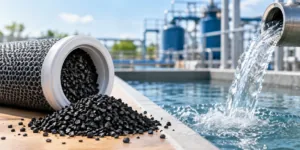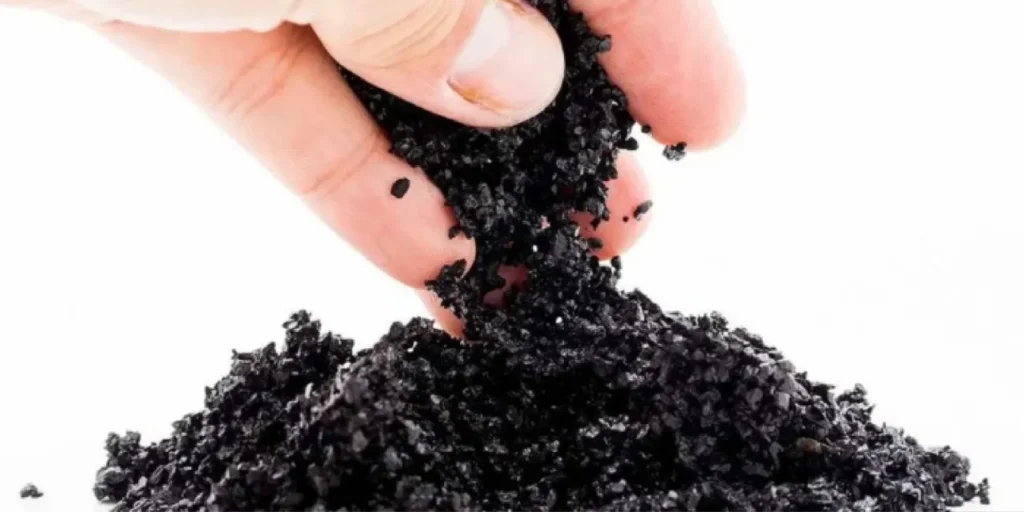
Activated carbon, often called activated charcoal, is a versatile material known for its ability to remove contaminants from water and air. It is made from organic materials such as coconut shells, peat, wood or coal, which are processed to create a highly porous structure. These pores give activated carbon a very large surface area, allowing it to adsorb contaminants effectively.
Read on to find out which types of contaminants activated carbon can remove and how it does so. If you would like to use activated carbon for water treatment, contact our team.
Common contaminants removed by activated carbon
Activated carbon is widely used in water and air purification systems because of its ability to remove contaminants. The most common include:
1. Organic compounds
Activated carbon is particularly effective at removing organic compounds from water and air. These include volatile organic compounds (VOCs) such as benzene, toluene and xylene, as well as pesticides, herbicides and industrial chemicals. The porous structure of activated carbon traps these organic molecules and prevents them from contaminating the surrounding environment.
2. Chlorine
Chlorine and chloramine are disinfectants commonly used in water treatment works. Although they kill harmful bacteria and pathogens, they can give water an unpleasant taste and odour. Activated carbon effectively removes chlorine and chloramine, improving the taste and odour of drinking water.
3. Heavy metals
Heavy metals such as lead, mercury, cadmium and arsenic pose serious health risks in drinking water. Activated carbon can adsorb some of these metals and reduce their concentration, which makes it a useful component of water filtration systems in areas where heavy metal contamination is a concern.
4. Odours and volatile compounds
Activated carbon is very effective at adsorbing odours and volatile compounds from air and water. Whether it is cooking smells in a kitchen or a musty smell in a basement, activated carbon can help remove unpleasant odours.
How activated carbon removes contaminants
Activated carbon’s ability to remove contaminants lies in its structure and its adsorption mechanisms. When contaminants come into contact with activated carbon, several processes take place:
- Adsorption: activated carbon traps contaminants by providing a large surface area to which molecules attach.
- Binding forces: contaminant molecules are held by van der Waals forces, electrostatic interactions and chemical bonds.
- Chemical reactions: activated carbon can catalyse reactions that break down certain contaminants, such as chlorine.
- Micropore and macropore adsorption: micropores (<2 nm) capture small molecules such as volatile organic compounds, while larger pores retain bigger contaminants such as natural organic matter.
What are the uses of activated carbon?
Activated carbon has applications across many industries and settings thanks to its versatility and effectiveness:
1. Water purification
One of its most common uses is in water purification systems. It is used in domestic water filters and large-scale water treatment plants to remove organic compounds, chlorine, heavy metals and other contaminants, helping to provide clean, safe drinking water.
2. Air filtration
Activated carbon is also used in air purification systems to remove odours, volatile organic compounds and airborne pollutants. It is often built into HVAC systems, air purifiers and industrial scrubbers to maintain good indoor air quality in homes, offices and industrial facilities.
3. Environmental remediation
Activated carbon plays an important role in cleaning up contaminated soil and groundwater. It can adsorb contaminants such as petroleum hydrocarbons, pesticides and industrial chemicals, helping to reduce the impact of pollution on ecosystems and human health.
4. Industrial processes
Many industrial processes rely on activated carbon for purification and filtration. Industries such as food and beverages, pharmaceuticals and chemical manufacturing use activated carbon to remove impurities, colour and unwanted odours from their products, supporting high standards of quality and safety.
The bottom line
Understanding how activated carbon removes contaminants helps us make the most of it to improve water quality and protect health. If you need help using activated carbon for water treatment at home or in your business, see our activated carbon or contact KEIKEN.