
- Home
- Filtration
- Filtration Media
- Zeolite for water filtration
Zeolite
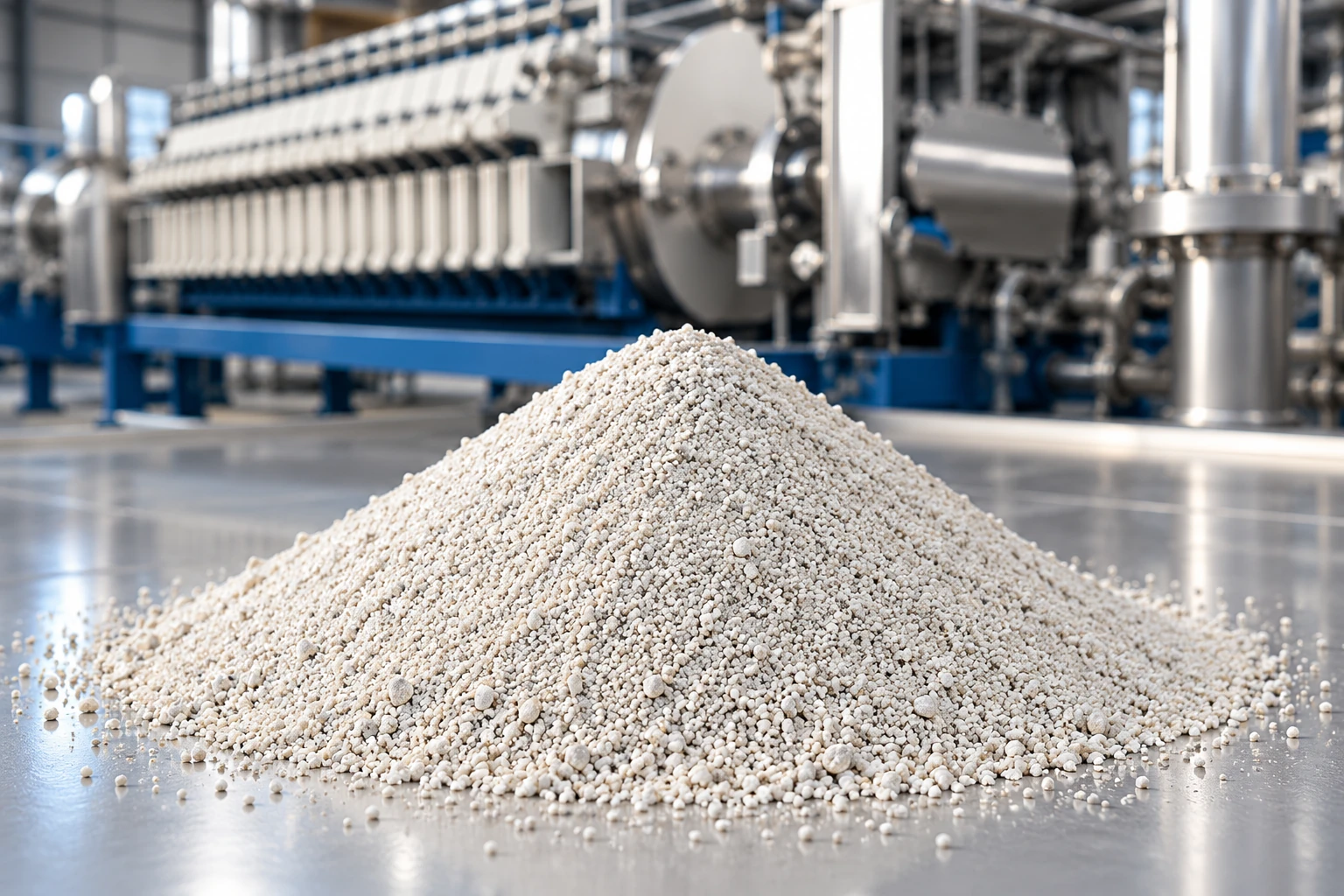
Zeolite is a natural mineral characterised by its porous structure and high ion-exchange capacity. It is used as a filtration medium in desalination and drinking water treatment processes.
What is zeolite used for in water treatment?
Zeolite is particularly suitable for desalination and drinking water treatment plants. Its porous structure and ion-exchange capacity enable it to retain particles down to 1 micron, supporting suspended-solids retention and the reduction of selected contaminants. This helps improve water quality and treatment-system efficiency.
Answers to your questions about zeolite
What is zeolite used for in water filtration?
It retains particles down to 1 micron. It is mainly used as pretreatment in seawater and brackish-water desalination plants and in drinking water treatment plants to protect reverse osmosis membranes.
What is the difference between zeolite and sand?
Zeolite retains finer particles—down to 1 micron—and allows higher filtration rates, with a noticeable reduction in SDI and turbidity and longer intervals between backwashes.
Does it reduce SDI before reverse osmosis?
Yes. Reducing SDI and turbidity is one of its main advantages and is why it is commonly used as pretreatment for reverse osmosis plants.
Which standard does KEIKEN zeolite comply with?
EN 16070 for the treatment of water intended for human consumption, with internationally recognised NSF certification.
Which packaging formats are available?
It is supplied in 1 m³ big bags and 21.5 kg bags.
Which particle size do I need?
It depends on the flow rate, filtration area and inlet-water quality.
What is a zeolite filter?
A gravity or pressure granular-media filter in which zeolite replaces or complements sand. It retains particles down to 1 micron and supports higher filtration rates.
What is the difference between zeolite and activated carbon?
They perform different treatment stages rather than serving as alternatives: zeolite retains suspended solids down to 1 micron, while activated carbon adsorbs dissolved organic matter and chlorine. Both can be used in the same pretreatment train.
Let’s discuss your filter bed
We are a B Corp company
B Corp certification independently assesses a company’s environmental and social performance, transparency and legal accountability. For us, it is more than a label: it provides a framework for our technical decisions. Every plant we design is also assessed for its energy consumption, the water footprint it helps reduce and its impact where it is installed.