
- Home
- Filtration
- Filtration Media
- Calcite for water remineralisation
Calcite
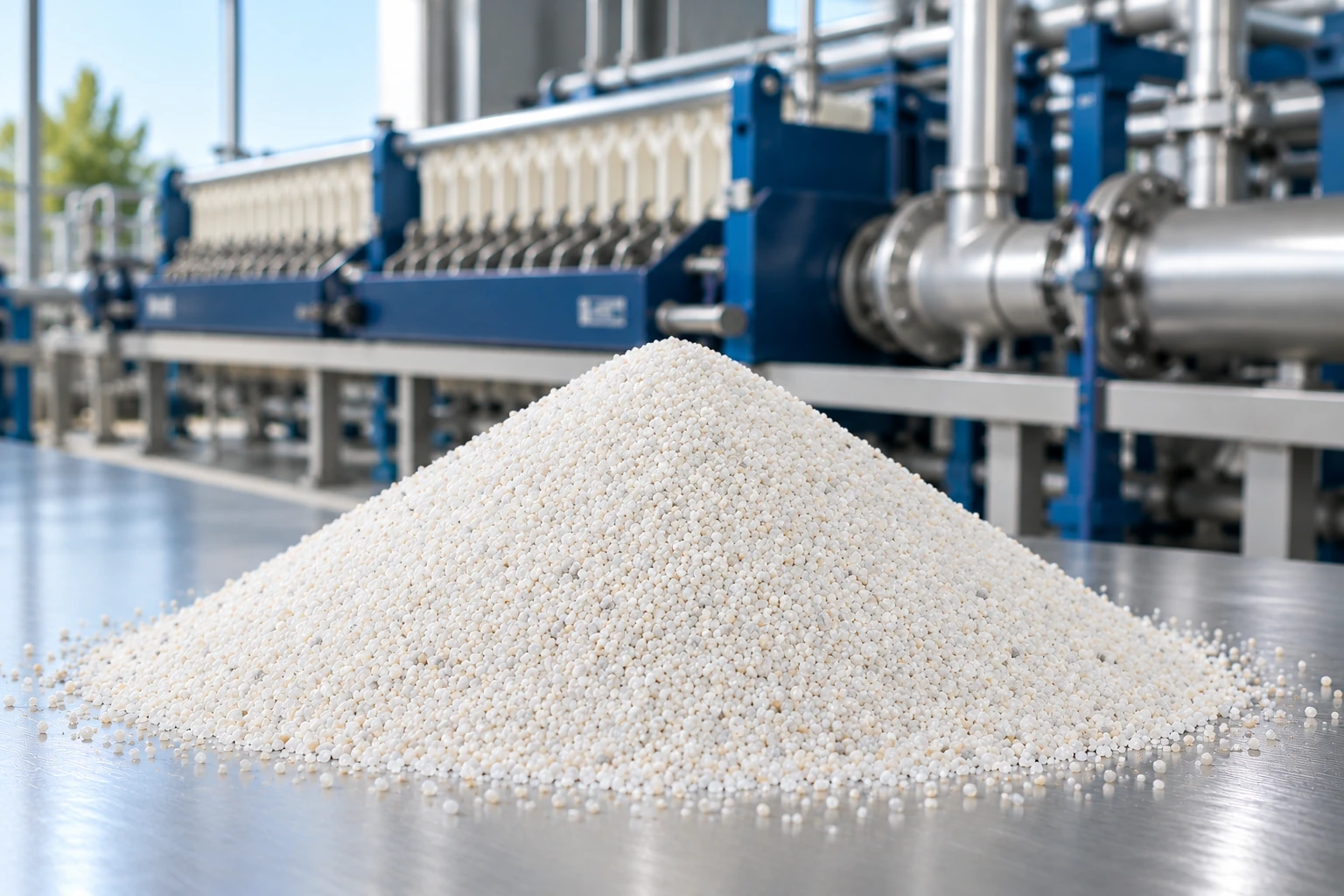
Calcite is a natural mineral composed mainly of calcium carbonate (CaCO₃), characterised by its high purity and controlled dissolution. It is primarily used to remineralise desalinated water and in drinking water treatment.
Why must water be remineralised after reverse osmosis?
Calcite increases calcium hardness and alkalinity and helps adjust pH. Used in calcite filters, it improves the chemical stability of water, reduces its corrosive potential and supports compliance with drinking-water quality requirements.
Answers to your questions about calcite
What is calcite used for in water treatment?
It is used for remineralisation. Reverse osmosis permeate has very low mineral content and can be aggressive towards pipework. A calcite bed adds calcium and alkalinity, restoring hardness and buffering capacity.
What is the purity of KEIKEN calcite?
More than 98% calcium carbonate, from a natural source and compliant with UNE-EN 1018.
Is it suitable for drinking water?
Yes. UNE-EN 1018 covers calcium carbonate used to treat water intended for human consumption, and the material holds NSF certification.
How is a calcite bed sized?
It depends on the flow rate, permeate quality and the target hardness and alkalinity of the treated water. Sizing is carried out case by case using the product-water analysis.
How often must the calcite be replenished?
Calcite is consumed as it dissolves and releases calcium into the water. The bed level therefore falls and must be replenished periodically. Frequency depends on the treated volume and the aggressiveness of the permeate.
Which packaging format is available?
It is supplied in 1 m³ big bags. For desalination projects, delivery is coordinated with the plant commissioning schedule.
Let’s discuss your filter bed

We are a B Corp company
B Corp certification independently assesses a company’s environmental and social performance, transparency and legal accountability. For us, it is more than a label: it provides a framework for our technical decisions. Every plant we design is also assessed for its energy consumption, the water footprint it helps reduce and its impact where it is installed.